 Iceland Volcano Tour
Eyjafjallajokull Tour: Every Way to Visit the 2010 Volcano
An Eyjafjallajokull tour is the closest most people will ever get to the volcano that closed European airspace in 2010. The catch, which surprises almost everyone, is that you cannot walk to the summit crater. It sits under an ice cap and no operator sells a hiking route to it, so every practical option is a vehicle: a snowmobile on the glacier, a super jeep up the slopes, or a jeep day into the Thorsmork valley behind the mountain. This page compares the tours side by side, explains what each one actually delivers, and is honest about the limits. The volcano has not erupted since 2010, so there is no lava to see, and weather closes these trips at short notice.
Quick answer Eyjafjallajokull tours at a glance
An Eyjafjallajokull tour costs from $250 for a 3-hour snowmobile trip on the ice cap. You cannot walk to the summit crater because a glacier covers it, so all options are vehicle based. Super jeep trips run $322 to $404 and a private day reaches $1,868.
Key takeaways
- Compare all four Eyjafjallajokull tours by price, duration and departure point.
- Snowmobiling is the cheapest way onto the volcano. See the comparison table for what each trip includes.
- Every option here is weather dependent. Glacier conditions and river levels cancel trips at short notice.
- If you want to walk on young lava instead, see the Fagradalsfjall hikes.
Eyjafjallajokull Tour Options Compared
The listings here all take you to Eyjafjallajokull or the valley at its feet. Two are super jeep trips up the mountain itself, one is a snowmobile ride on the ice cap, and one is a private full-day combination with the Thorsmork valley. What they do not cover matters as much: none of them reaches the summit crater on foot, none of them shows you lava, and none of them includes hotel pickup except the private trip. Lunch is only included on the Thorsmork day from Vik. Figures current in Q3 2026.
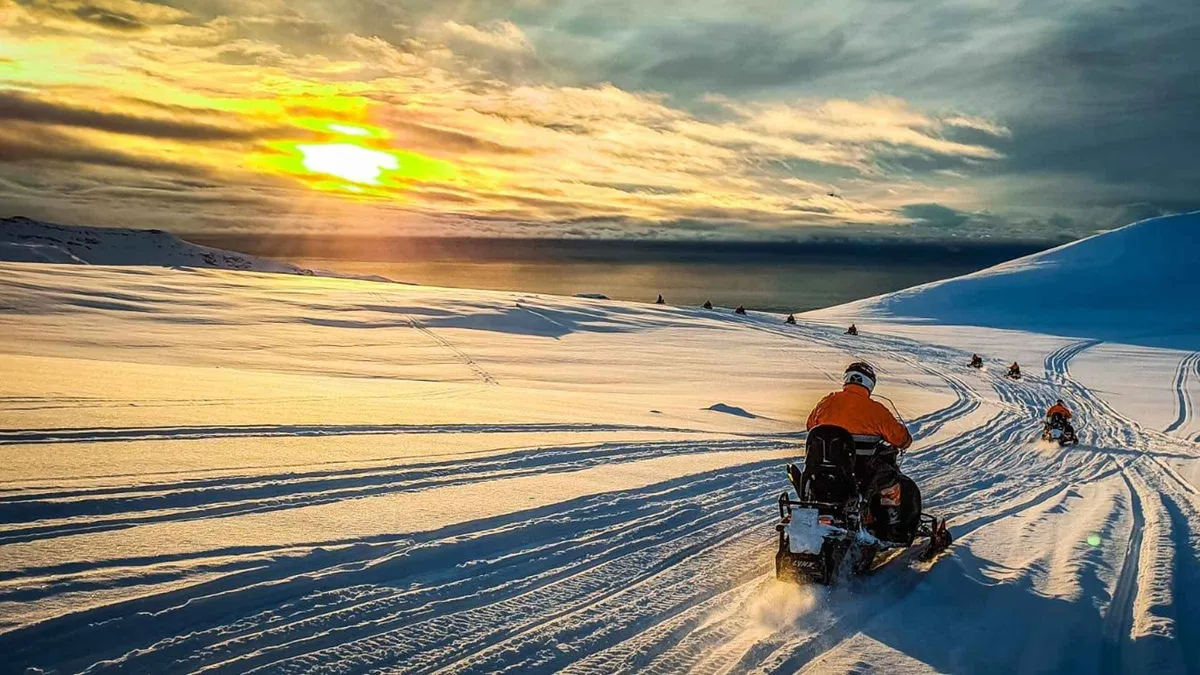 from $250
On the 2010 ice cap
from $250
On the 2010 ice cap Snowmobiling on Eyjafjallajokull
The practical way onto the 2010 volcano, since the summit crater sits under a glacier and there is no walking route to it. Warm outdoor clothing and hiking boots are on you, not the operator.
- Snowmobile on the Eyjafjallajokull ice cap
- The volcano behind the 2010 airspace shutdown
- 35 minutes up by super jeep, an hour riding, 35 minutes back
- Driving licence needed to ride solo; passengers from age 6
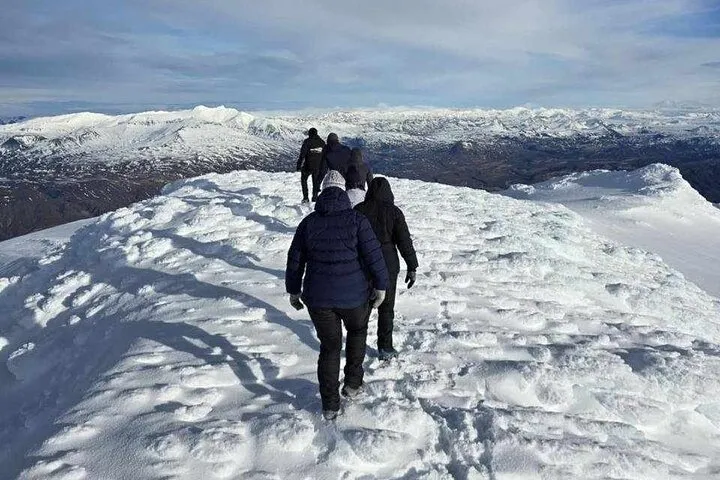 from $404
Up the 2010 volcano
from $404
Up the 2010 volcano Eyjafjallajokull by Super Jeep
The driving route onto the 2010 volcano, starting from the Bru base camp 7 km along road 249 past Seljalandsfoss. Eight reviews so far, so the sample is small.
- Super jeep up the slopes of Eyjafjallajokull
- Views over the south coast and the Westman Islands
- Starts at Bru base camp on road 249
- Local guide, lunch not included
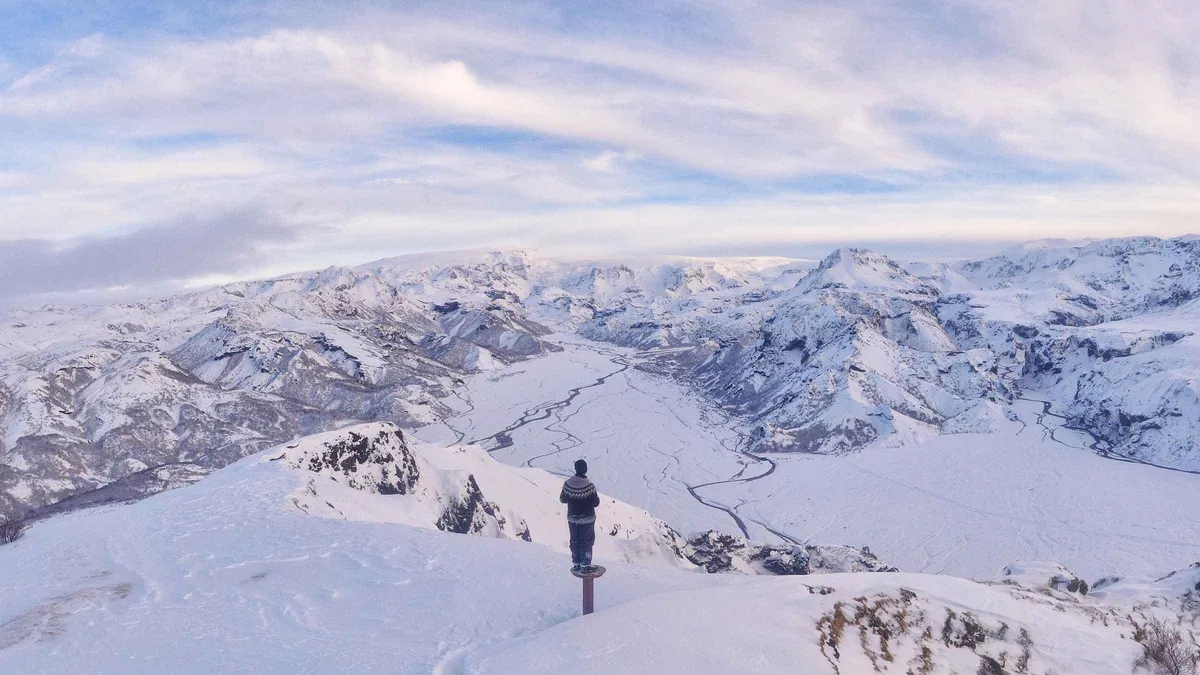 from $322
River crossings
from $322
River crossings Thorsmork by Super Jeep from Vik
The shared-seat way into Thorsmork, capped at 14 people, with a light lunch included. Children under 6 are not accepted and the meeting point is the Bru base camp on road 249.
- Thorsmork valley behind the river crossings
- A glacier tongue of Eyjafjallajokull
- Group limited to 14 participants
- Light lunch included
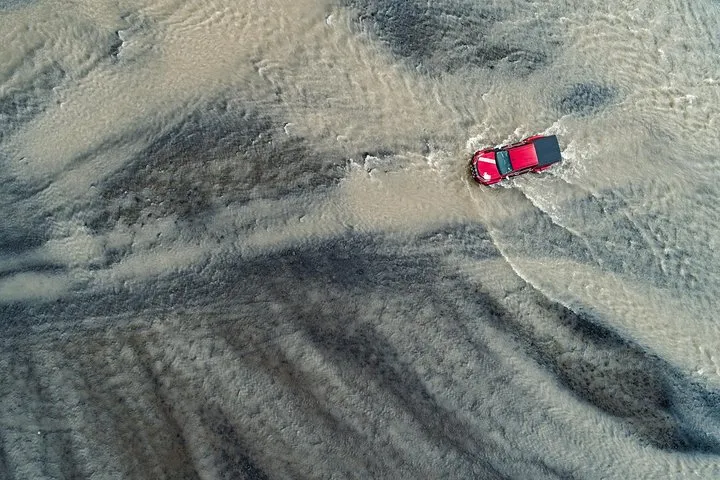 from $1,868
Private, 38-inch trucks
from $1,868
Private, 38-inch trucks Eyjafjallajokull and Thorsmork Experience
Priced for the vehicle rather than the seat, so it only makes sense split between a group. Hotel pickup is included and the river crossings are the point of the day.
- Private super jeep on 38-inch tyres or bigger
- Thorsmork valley and the Eyjafjallajokull massif
- Glacier river crossings on mountain roads
- Hotel pickup and drop-off included
Side By Side: Price, Duration and Departure
The table below lines up the four Eyjafjallajokull tours on what you actually get, how long the trip lasts, where it starts and what it costs. Prices are the dollar figures the operators publish on GetYourGuide and Viator. Note that all four meet at or near the Bru base camp on road 249 rather than picking up in Reykjavik, unless the listing says otherwise.
| Tour | What you get | Time | Book | Leaves from | Price |
|---|---|---|---|---|---|
| Snowmobiling on Eyjafjallajokull | Snowmobile on the ice cap | 3 hours | Check Availability | Bru Base Camp near Seljalandsfoss | $250 |
| Eyjafjallajokull by Super Jeep | Super jeep up the slopes, south coast and Westman Islands views | 5 hours | Check Availability | Bru base camp, road 249 | $404 |
| Thorsmork by Super Jeep from Vik | Thorsmork valley, glacier tongue, light lunch | 6 hours | Check Availability | Bru Base Camp, road 249 | $322 |
| Eyjafjallajokull and Thorsmork Experience | Private modified super jeep, hotel pickup, river crossings | 10 hours | Check Availability | Your hotel lobby | $1,868 |
What Eyjafjallajokull Actually Is
The facts behind the most famous name in Icelandic volcanism, and the one measurement-driven reason there is no walking route.
The Volcano Behind the 2010 Shutdown
Eyjafjallajokull is the volcano whose 2010 eruption sent an ash cloud over Europe and closed airspace across the continent. That event is why the name is famous and why people ask about it years later. The mountain has not erupted since.
There is no live lava here now, and no listing on this page promises a view of an eruption. What you get is the mountain itself: an ice cap covering the summit crater, glacier tongues spilling down its flanks, and the green Thorsmork valley on its north side.
Why You Cannot Walk Up It
This is the fact that changes most plans. The summit crater sits under a glacier, and no tour sold on this site includes a walking route to it. That is why every Eyjafjallajokull tour here is a vehicle trip: a snowmobile across the ice, or a super jeep on the mountain tracks. If you want to hike on volcanic terrain, the realistic alternatives are the cooled lava fields of the Reykjanes peninsula or the inside of a dormant volcano at Thrihnukagigur, where you descend into the magma chamber by crane.
One warning from the mountain's own backyard. ICE-SAR's Safetravel service warns that conditions on the Fimmvorduhals hiking trail are dangerous and advises people not to hike it while they stay that way. That trail runs between Eyjafjallajokull and Myrdalsjokull, so check safety during an eruption and current alerts before planning any self-guided walk in this area.
- No walking route to the summit crater is sold by any operator here
- Every listed option uses a snowmobile or a super jeep
- The Fimmvorduhals trail is currently flagged as dangerous by Safetravel
Getting There and What It Costs
Where the trips start, how you reach the start, and the money side.
The Bru Base Camp
Three of the four tours start at the same place. Southcoast Adventure's base camp, Bru, sits about 7 km along road 249 past Seljalandsfoss. None of the three shared trips offers hotel pickup, so you drive there yourself or arrange your own transport.
The meeting point for the snowmobile trip is listed as Hvolsvollur, with the base camp near Seljalandsfoss as the on-site location. Only the private Arctic Trucks trip collects you from your hotel lobby.
What You Pay and What Is Included
Prices range widely because the products are different shapes. The snowmobile trip at $250 is the entry point, and the private full-day super jeep at $1,868 is priced for the vehicle, which only makes sense split between a group. Lunch is included on just one trip, the Thorsmork day from Vik. On the others you bring your own food. All four listings offer free cancellation up to 24 hours before the start.
The table gathers the inclusions so you can see what the money buys. For a wider view of glacier trips elsewhere on the south coast, the Katla ice cave tours under the neighbouring Myrdalsjokull glacier are the closest comparison.
| Tour | Price | Lunch | Hotel pickup | Cancellation |
|---|---|---|---|---|
| Snowmobile, 3 hours | $250 | No | No | Free up to 24h |
| Super jeep, 5 hours | $404 | No | No | Free up to 24h |
| Thorsmork from Vik, 6 hours | $322 | Light lunch included | No | Free up to 24h |
| Private full day, 10 hours | $1,868 | No | Yes | Free up to 24h |
Which Eyjafjallajokull Tour Suits You
The four products overlap on the map but not in character. Here is who each one is for.
Snowmobile on the Ice Cap
The snowmobile trip is the only way to stand on the ice cap that covers the crater. A super jeep takes you 35 minutes up the mountain, you ride the snowmobile for about an hour, then 35 minutes back down. It lasts 3 hours in total and costs $250.
No experience is needed, but you must dress for the glacier, and warm outdoor clothing and hiking boots are on you, not the operator. Passengers can ride from 6 years old, and a driving licence is required to ride your own snowmobile. This suits people who want the actual ice under them and are happy to drive a machine in cold wind.
Super Jeep Up the Slopes
The super jeep trip is the driving option on the mountain itself. It runs 5 hours from the Bru base camp and costs $404, with views over the south coast and the Westman Islands from the slopes. It is suitable for all fitness levels because you stay in the vehicle, and infant seats are available.
The honest caveats: the listing is not recommended during pregnancy or with spinal injuries because the track is rough, and it has only 8 reviews so far, so the sample is small. This suits people who want the mountain without a machine to control.
Thorsmork by Super Jeep
The Thorsmork day skips the upper mountain and goes behind it instead. Thorsmork sits behind river crossings that keep ordinary cars out, which is exactly what the super jeep is for. The trip lasts 6 hours, costs $322, is capped at 14 participants and includes a light lunch.
Children under 6 are not accepted, and river levels decide the route and can cancel the day entirely. You also pass a glacier tongue of Eyjafjallajokull. This suits travellers who care more about the valley landscape than the summit.
Private Full-Day Combination
The private trip with Arctic Trucks Experience is the deep version. It runs 10 hours, costs $1,868 for the vehicle, and covers both the Thorsmork valley and the Eyjafjallajokull massif with glacier river crossings on mountain roads. The jeep runs on 38-inch tyres or bigger.
Hotel pickup and drop-off are included, infants sit on an adult's lap, and the difficulty is listed as suitable for all fitness levels. You bring warm outdoor clothing, good shoes and snacks for the whole day, since no lunch is included. Split between four or five people it becomes competitive with the shared trips, and it is the only option from this list that starts at your hotel.
Honest Limits, Safety and Season
What you will not see, who should think twice, and when these trips run.
What You Will Not See
Set expectations now. You will not see lava, because the mountain has not erupted since 2010 and there is no active eruption flowing anywhere at the time of writing. You will not stand in the summit crater, because the glacier covers it and no operator sells a walking route.
Access to any live eruption site in Iceland is decided by the Department of Civil Protection and Emergency Management, not by the tour operator, so no company can promise what will be open. If seeing fresh lava matters to you, the realistic options are the Reykjanes eruption sites, a helicopter flight over the new crater rows, or an indoor lava show.
Who Should Not Go
The super jeep track is rough, so the 5-hour mountain trip is not recommended during pregnancy or with spinal injuries. The Thorsmork day does not accept children under 6, while the snowmobile trip takes passengers from 6 but needs a driving licence for anyone riding their own machine. Glacier conditions cancel snowmobile rides at short notice, and river levels can cancel the Thorsmork day.
If any of those applies to your group, read the cancellation terms before booking and keep the 24-hour free cancellation window in mind. The emergency number in Iceland is 112, and ICE-SAR publishes 599-0112 as a backup line.
Season and Conditions
The facts pack does not publish fixed opening seasons for these tours, so availability follows the operators' calendars rather than a stated date range. What is stated is the weather logic. Snowmobile rides depend on glacier conditions and cancel at short notice.
The Thorsmork route depends on river levels, which change with rain and glacial melt. The private full day simply asks you to bring warm layers, good shoes and snacks for the whole day. Dress for wind and cold whatever the calendar says, and the guide to what to wear on a volcano hike covers the kit list.
For other highland volcano country with a stated season, see the Askja and Viti crater page or the Landmannalaugar highland routes.
Why the 2010 Eruption Still Sells Tours
The name Eyjafjallajokull carries weight far beyond Iceland. This section explains what happened in 2010 and how that history shapes the tours on offer today.
The Ash Cloud That Closed Europe
In 2010 an eruption at Eyjafjallajokull sent an ash cloud over Europe and closed airspace across the continent. The explosion itself came from beneath an ice cap, and the meltwater and ash mix turned a local eruption into a global disruption. Millions of travellers learned a name many could not pronounce, and the mountain became one of the most recognisable volcanoes on earth.
The event also explains the shape of the tour market. The summit crater sits under a glacier and no listing on this site sells a walking route to it, so every option is a vehicle of some kind. You ride up in a super jeep or on a snowmobile rather than hiking to a rim. The 2010 eruption is the one that closed European airspace, and the mountain has not erupted since, so what you are visiting is a cooled, ice-covered volcano with a famous recent past. For context on how Iceland handles volcanic events now, see the guide to safety during an eruption.
What That History Means for Visitors
The fame is the reason an Iceland volcano tour on this mountain exists at all. Operators such as Southcoast Adventure run trips from the Bru base camp about 7 km along road 249 past Seljalandsfoss, and the 2010 story is part of the pitch on every listing. Guides talk through the eruption and its consequences as you climb the slopes.
Keep expectations honest. There is no lava, no fresh crater and no visible eruption, since the mountain has been quiet since 2010. What you get is the terrain itself, the glacier, the valley of Thorsmork behind the river crossings, and a guide who lived through the shutdown and can describe it first hand. That is a different product from the fresh lava fields on the Reykjanes peninsula. If cooled lava hikes interest you, compare them in our Fagradalsfjall coverage before choosing. The Eyjafjallajokull trips sell history, height and ice, not glowing rock, and the best listings say so plainly.
On the Ground: Snowmobile, Super Jeep or Thorsmork
Three very different days share one mountain. Here is what the terrain feels like on each and who each option suits.
The Glacier Routes Above the Base Camp
The two mountain options start at the same place but deliver different days. The snowmobile trip is the fastest way onto the ice cap. A super jeep takes 35 minutes up the mountain road, you ride the snowmobile for about an hour, then 35 minutes back down. It costs $250, lasts 3 hours and needs no experience, though a driving licence is required to ride your own machine and passengers can be as young as 6. The surface is snow and ice, wind is normal, and glacier conditions can cancel rides at short notice.
The super jeep drive is slower and steadier. It runs 5 hours for $404, starts at the Bru base camp 7 km along road 249 past Seljalandsfoss and suits all fitness levels because you never leave the vehicle. The track up is rough, so the listing advises against it during pregnancy or with spinal injuries. Views stretch over the south coast and the Westman Islands. Choose the snowmobile if you want motion and speed on the ice, the jeep if you want the climb without holding handlebars in the wind. Both are vehicle trips with no walking to the crater.
The Thorsmork Valley Days
The third option never climbs the ice cap at all. Thorsmork sits behind river crossings that keep ordinary cars out, which is exactly what the super jeep days are for. The shared trip from Vik costs $322 for 6 hours, caps the group at 14 participants and includes a light lunch, but children under 6 are not accepted. The track is rough and the river levels decide the route, so water can reshape or cancel the day. Along the way you see a glacier tongue of Eyjafjallajokull from below rather than standing on the ice above.
The private alternative is the Eyjafjallajokull and Thorsmork Experience, a 10-hour day in a modified super jeep on 38-inch tyres or bigger, priced at $1,868 with hotel pickup and drop-off included. It is priced for the vehicle rather than the seat, so it only makes sense split between a group, and the river crossings are the point of the day. Compare the numbers in the side by side table, then pick your trip from the full tour list. Valley or ice cap is the real choice here.
What To Wear and Bring on a Glacier Day
The south coast in any season rewards layered clothing and punished anyone who arrives in trainers. Here is what to bring and what the operators supply.
Clothing That Works on Ice and Rough Track
Icelandic operators are blunt about clothing, and the listings here repeat one message: warm outdoor clothing and good shoes are on you, not on them. The snowmobile card says it directly, and the private full-day combination asks for warm outdoor clothing, good shoes and snacks for the whole day. Think in layers. A wool or synthetic base layer, an insulating mid layer and a windproof waterproof shell cope with the range of conditions on an exposed glacier track. Cotton jeans and fashion jackets get wet and stay wet when the wind drives rain sideways.
Footwear matters as much as coats. Hiking boots with ankle support handle the rough ground at the base camp and the short walks at photo stops. On the snowmobile, cold comes from wind speed rather than air temperature, so cover every inch of skin. If you want a fuller packing approach that also covers lava-field hikes, our separate guide on what to wear on a volcano hike goes into detail that applies here too.
What Operators Provide and What They Do Not
Do not assume gear is included. Across the four tours listed here, the pack shows no lunch on the snowmobile, super jeep or private day trips, and drinks are not stated on any of them. Only the shared Thorsmork day includes food, a light lunch, and even there drinks are not stated. Snacks and water are therefore your job, especially on the 10-hour private combination, where the listing tells you to bring enough for the whole day.
Nobody on these listings states that overalls, helmets or boots are provided, so ask the operator before you go and budget for rental if needed. Weather is the other provision question. Glacier conditions cancel snowmobile rides at short notice, and river levels can reshape or end a Thorsmork day, so keep the free 24-hour cancellation window in mind when you book. All four tours list free cancellation 24 hours before the start, which is the practical safety net when a south coast forecast turns. Book warm, book flexible, and the mountain will do the rest.
Sources: Icelandic Met Office, Safetravel
Pros and Cons of an Eyjafjallajokull Tour
A straight list of what works and what does not, drawn from the operator listings.
What we genuinely like
- The snowmobile trip is the only practical way onto the ice cap covering the crater, at $250 for 3 hours
- All four listings include free cancellation up to 24 hours before the start
- The private full day is the only option with hotel pickup and drop-off
- The Thorsmork day includes a light lunch and is capped at 14 participants
- The super jeep trips suit all fitness levels because there is no hiking
The honest downsides
- You cannot walk to the summit crater, so hikers should look elsewhere
- No tour shows lava, and the mountain has not erupted since 2010
- Three of the four trips have no hotel pickup, so you reach the Bru base camp yourself
- Glacier conditions and river levels cancel trips at short notice
- The private trip at $1,868 is priced per vehicle and only makes sense for a group
Who it's NOT for: This is not the page for travellers who want to hike to a crater rim or see active lava, since Eyjafjallajokull offers neither.
Eyjafjallajokull Tour Questions
Is Eyjafjallajokull still active?
It is an active volcano in geological terms, but it has not erupted since 2010, the year its ash cloud closed European airspace. There is no lava flowing there now. You visit the mountain by vehicle, as our Eyjafjallajokull tour comparison shows.
Can you visit Fagradalsfjall volcano on your own?
Fagradalsfjall is a different volcano, on the Reykjanes peninsula about 30 km from Reykjavik, and it is a hiking destination rather than a vehicle one. Access to an eruption site there is decided by the Department of Civil Protection, not by operators. Our Fagradalsfjall guide covers the trails and the guided options.
What is the best volcano tour in Iceland?
It depends on what you want. To stand on Eyjafjallajokull's ice cap, the 3-hour snowmobile trip at $250 is the practical pick. To walk on cooled lava, choose Reykjanes. To go inside a magma chamber, the Thrihnukagigur descent is the only one of its kind.
What is the best glacier tour in Iceland?
For the 2010 volcano specifically, the snowmobile ride on the Eyjafjallajokull ice cap is the closest you can get to the crater, since a glacier covers the summit and no walking route exists. On the same south coast, Katla ice cave tours take you under the neighbouring Myrdalsjokull glacier.
Why is there no hiking route up Eyjafjallajokull?
The summit crater sits under an ice cap, and no operator sells a walking route to it, which is why every listed option is a snowmobile or a super jeep. The nearby Fimmvorduhals trail is separately flagged as dangerous by Safetravel at present. See what to wear if you plan any walk in this area instead.
How much does an Eyjafjallajokull tour cost?
The shared options run from $250 for the 3-hour snowmobile trip to $404 for the 5-hour super jeep, with the 6-hour Thorsmork day at $322. The private 10-hour combination costs $1,868 per vehicle. The full figures sit in our comparison table.