The Volcanoes You Can Actually Visit
Iceland has around thirty active volcanic systems, and a tourist with a week can realistically stand on about nine of them. These are the ones with tours, pages and facts behind them.
Fagradalsfjall and the Reykjanes Crater Rows
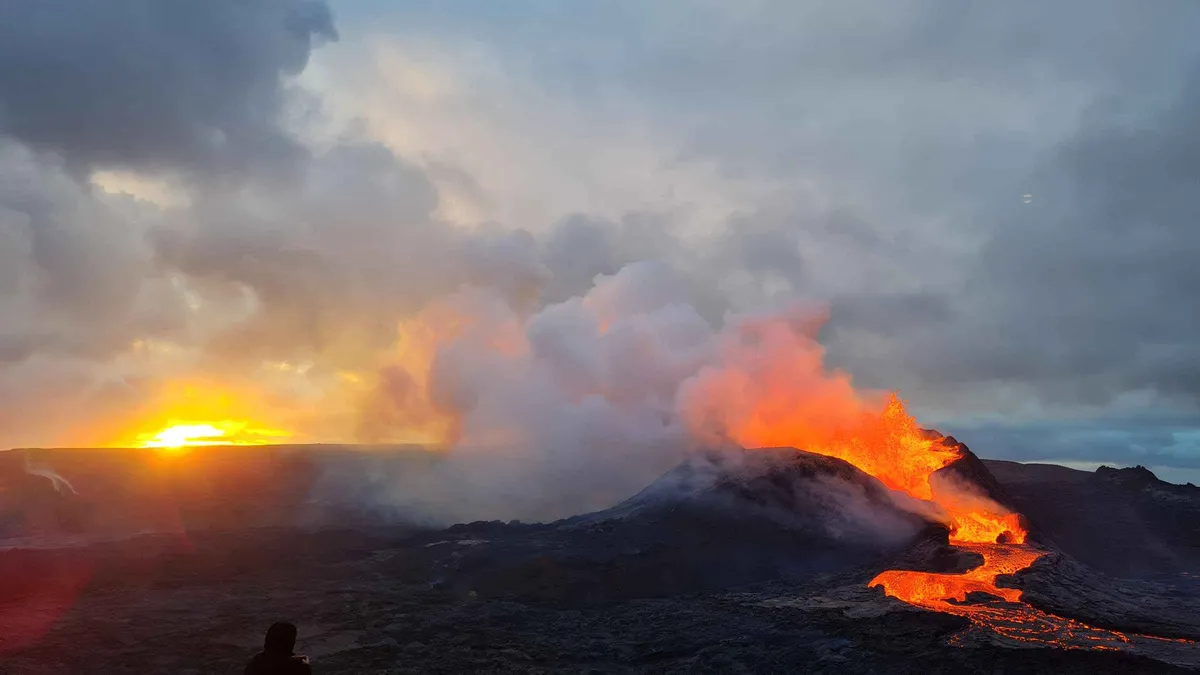
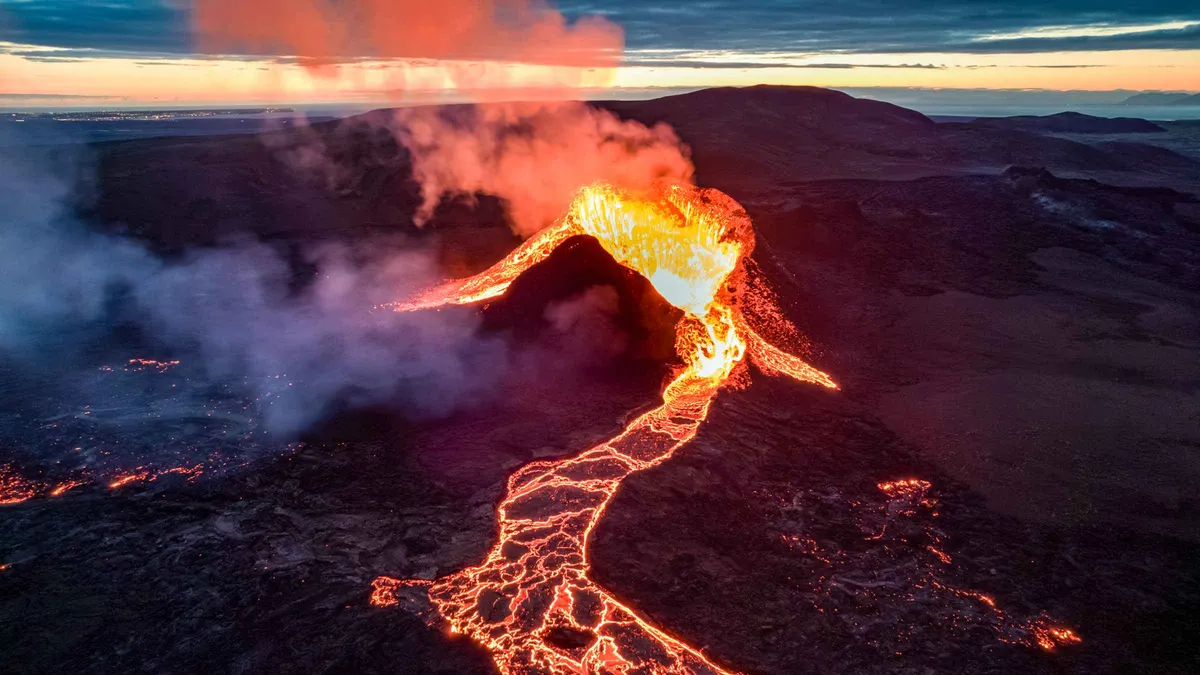
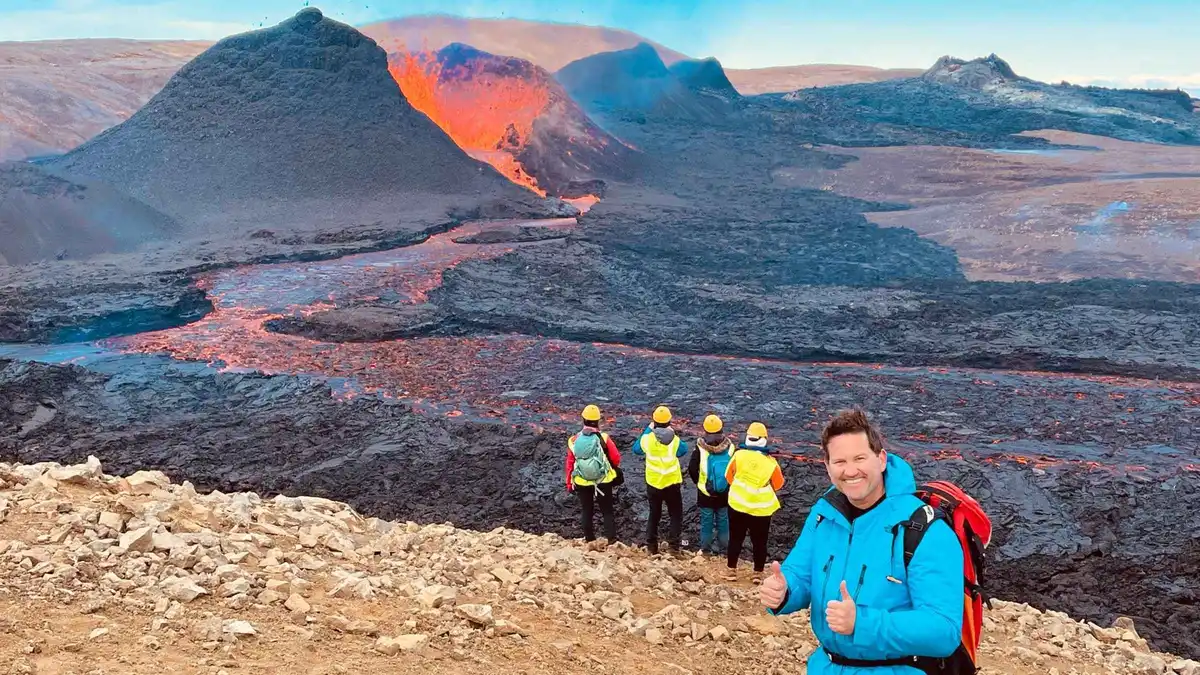
Fagradalsfjall erupted in 2021, 2022 and 2023, and the Sundhnukur crater row just north of it erupted repeatedly after that, 12 eruptions in 4 years by the helicopter operator's count. The area lies about 30 km from Reykjavik, which makes it the closest volcano to the capital and the reason most first-time visitors end up here. The lava is cold, the terrain is rough, and the Icelandic Met Office reports continued uplift at Svartsengi, so the ground is still being watched.
Read the full comparison of Fagradalsfjall tours or the wider Reykjanes and Grindavik options.
Thrihnukagigur
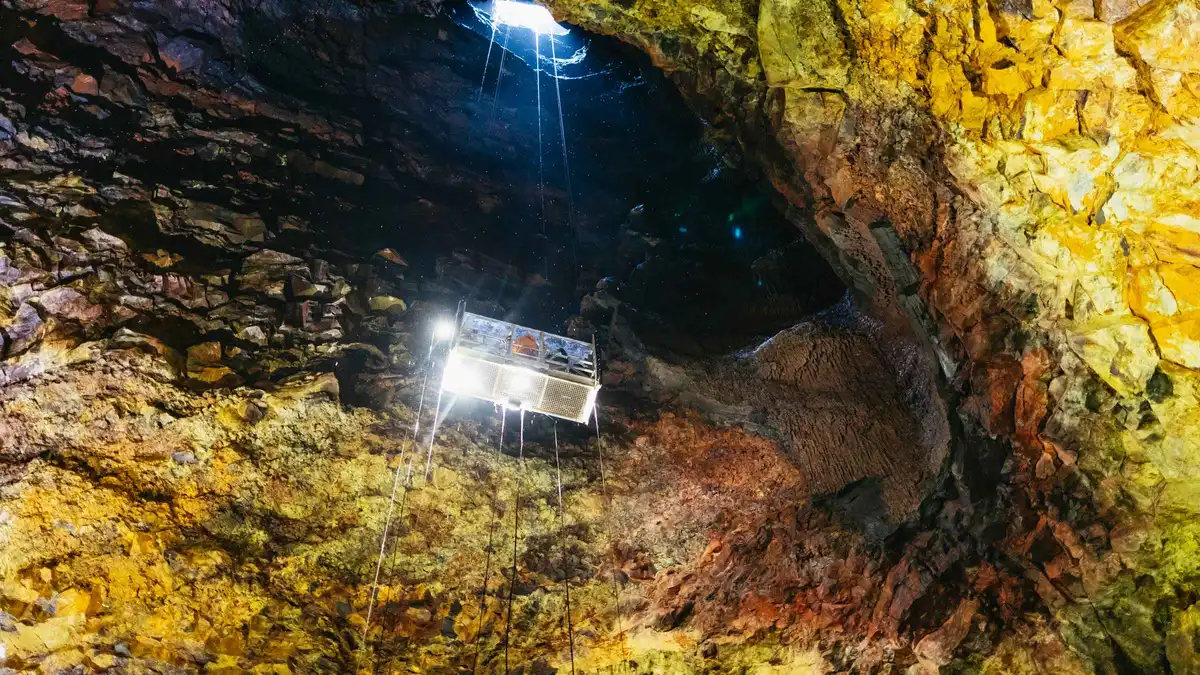
Dormant for over 4,000 years, Thrihnukagigur holds the claim of being the only place on earth where you can descend into a dormant volcano and walk its lava chamber. The lift drops 120 metres, 400 feet, into the chamber. The adult ticket bought from the operator's own site is ISK 51,000 and the child price is ISK 25,000 for children aged 8 to 12.
The season runs 5 May to 30 October every year, with a 3 km hike each direction taking about 45 to 50 minutes. The meeting point is a ski cabin called Breidabliksskali in the Blafjoll mountains, about 30 minutes on paved road from Reykjavik. Full details on the Inside the Volcano page.
Katla
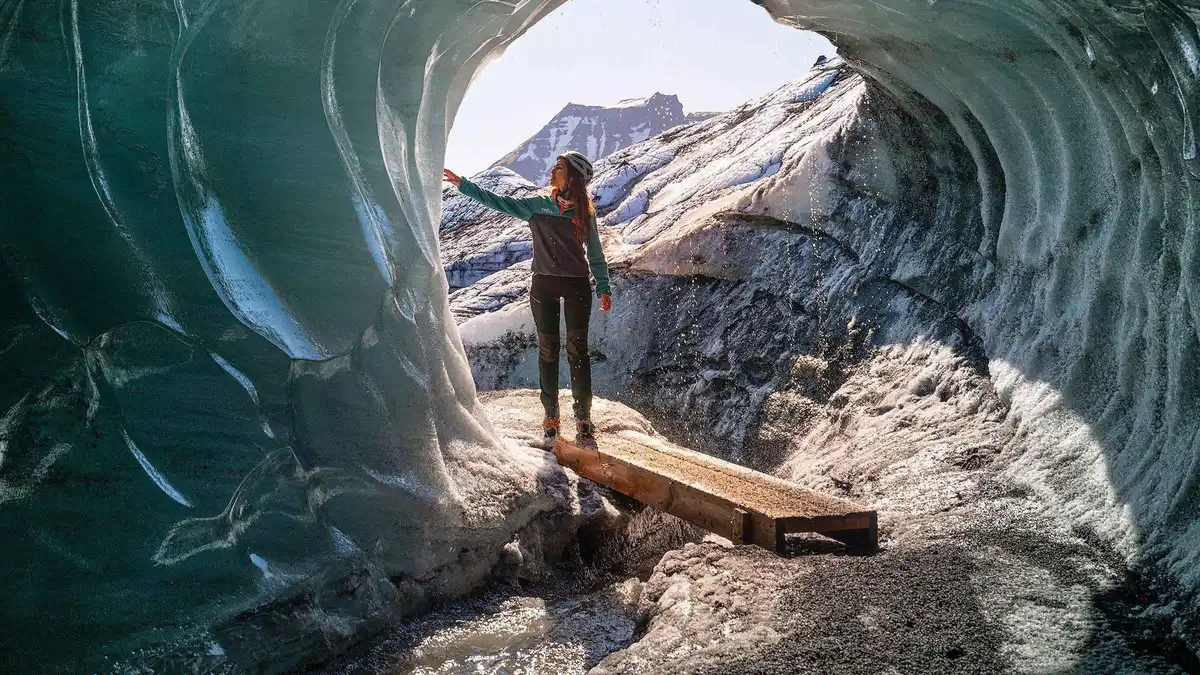
Katla sits under the Myrdalsjokull ice cap, and the ice cave tours enter Kotlujokull, an outlet of that glacier. You never see the volcano itself, only the ice shaped by its heat and the black sand it grinds out. The tours run from Vik by super jeep, 3 hours door to door with crampons and a helmet provided.
The caves are natural and the route inside changes through the season. Everything on the Katla ice cave tours page comes from the operator listings.
Eyjafjallajokull
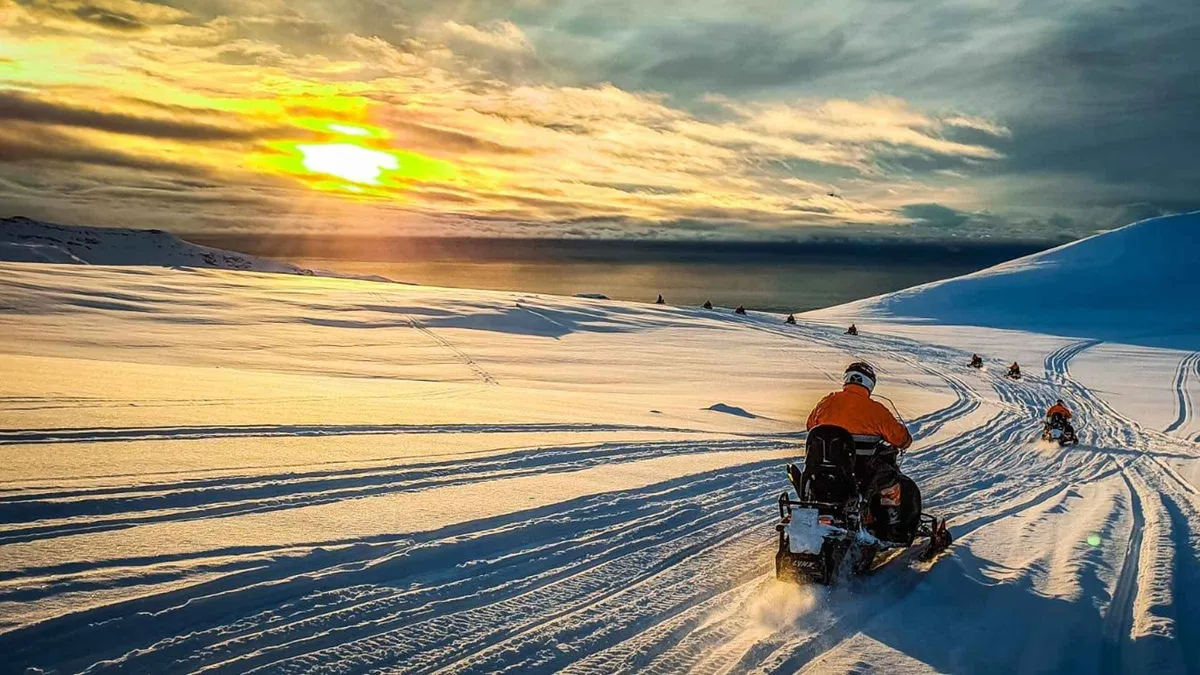
The 2010 eruption sent an ash cloud over Europe and closed airspace across the continent, which is why this name is the one most visitors already know. The summit crater sits under a glacier and there is no walking route to it, so the practical way onto the volcano is a snowmobile on the ice cap. The 3-hour tour runs from Bru Base Camp near Seljalandsfoss, with 35 minutes up by super jeep, about an hour riding and 35 minutes back.
See the Eyjafjallajokull tours page for the details.
Kerid
Kerid is a crater about 6,500 years old in Grimsnes, south Iceland, part of the Western Volcanic Zone. It is about 55 m deep, 170 m wide and 270 m across, and a red lake sits at the bottom. The site charges an ISK 700 service fee at the gate and is open, in the words of its own site, when the sun is shining.
It is the easiest crater to reach from the Golden Circle route, and the morning bus departures include it while departures at 12:00 or later drop it. Compare options on the Kerid crater page.
Eldfell on Heimaey
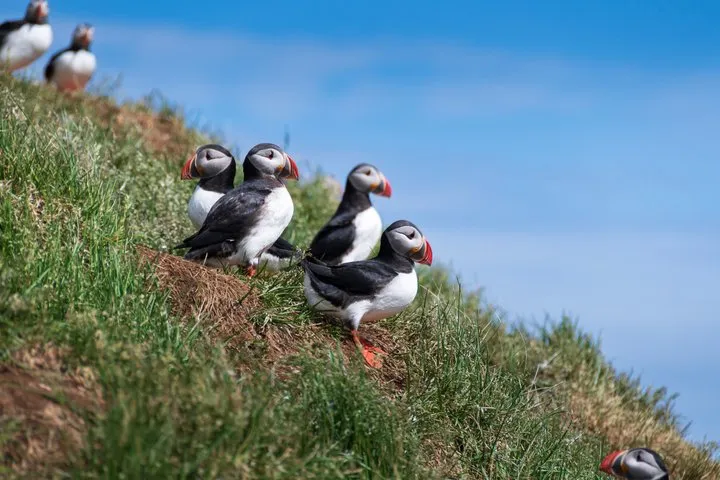
The 1973 Eldfell eruption on Heimaey buried part of the town, and the islanders pumped seawater onto the advancing lava to protect the harbour, which is why the port still exists in the shape it does. The island also hosts the world's largest Atlantic puffin colony in summer, with over 1.1 million puffins nesting according to the tour listing, and none at all in winter. Puffins are on the cliffs roughly May to August only.
The 2.5-hour island tour is built for cruise arrivals and covers the buried streets and Elephant Rock. Details on the Eldfell and Heimaey page.
Askja in the Highlands
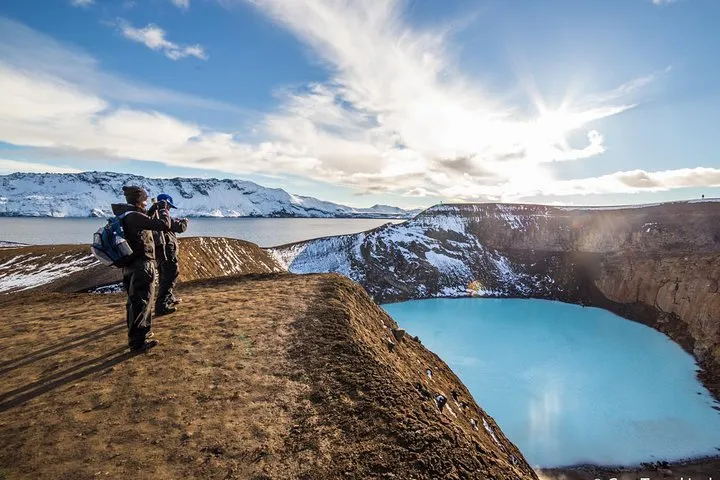
Askja is a caldera in the highlands, reachable only on F-roads that are shut by snow for most of the year. Viti is an explosion crater beside the caldera, and the Holuhraun lava field nearby was left by the 2014-2015 eruption and is the largest in Iceland since 1783. There are no shops or restaurants anywhere on the route, so bring your own food for the 12-hour day.
The uplift episode that began at Askja in 2021 has ended, according to the Met Office measurements. The tour runs from Lake Myvatn with a maximum of 10 per booking. See the Askja and Viti page.
Hekla and Landmannalaugar
Hekla is the volcano Icelandic chronicles return to most often, and the only way onto it sold here is by super jeep from the Landmannalaugar side, where rhyolite mountains sit on volcanic ground and the F-roads set the season. The highlands are a summer destination by force rather than preference. If the highland day is what you want, compare the Hekla super jeep trips and the Landmannalaugar tours before you book, since most listings sell the two together and the balance between them differs listing by listing.
Snaefellsjokull and the Lava Tubes
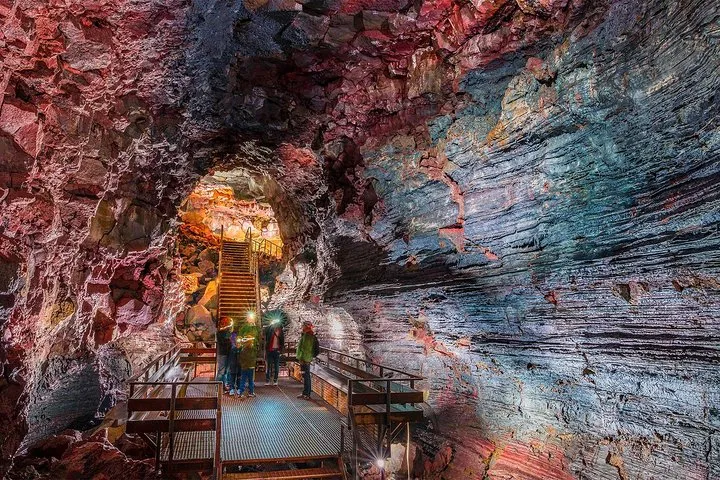
Snaefellsjokull caps its volcano in ice, in the pattern Iceland repeats across the country, and lava tubes run through the region's older flows. The tube you can reach from Reykjavik without a long drive is Raufarholshellir, on road 39 towards Thorlakshofn, left by the Leitahraun eruption about 5,200 years ago. The Raufarholshellir lava tunnel tour page has the full detail, from the 9:00 to 17:00 opening hours to the ISK 8,900 standard ticket.
No Lava? There Is Still Molten Rock
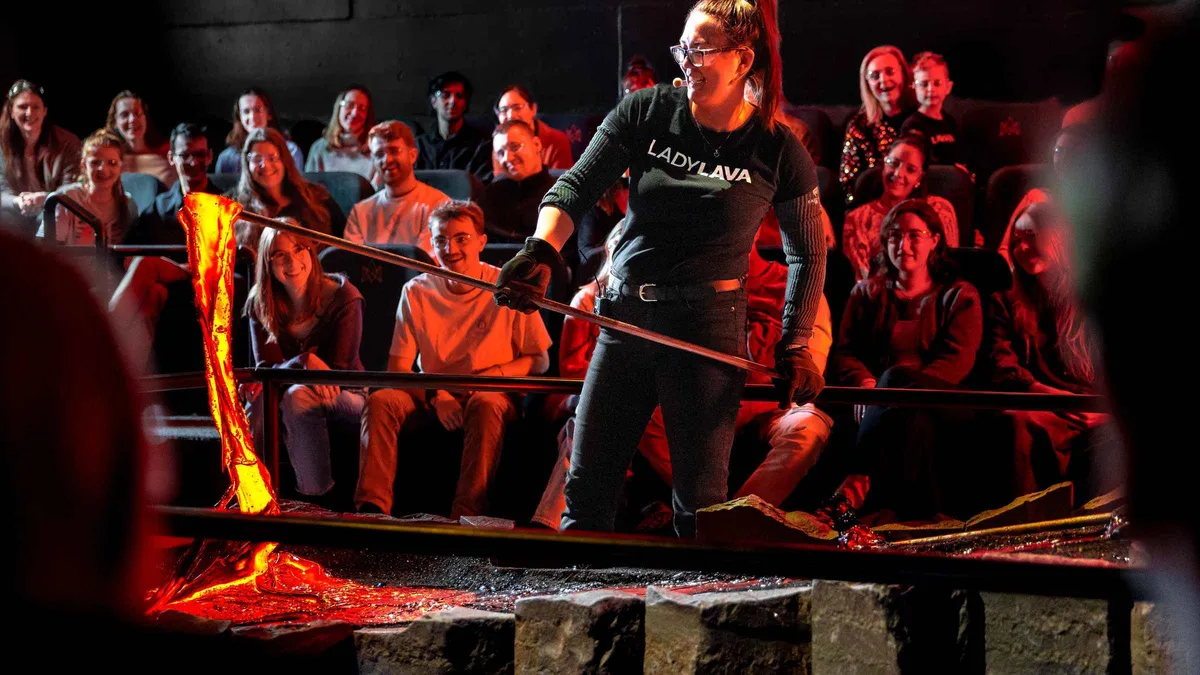
One more stop belongs in any list of volcanic Iceland, and it is indoors. The Icelandic Lava Show pours real molten lava in a theatre in central Reykjavik, several shows a day, 50 to 75 minutes each, at the moment the only guaranteed lava in the country. It is wheelchair accessible on the ground floor and not recommended for children under 5.
The lava show page explains what happens at a performance.
 Iceland Volcano Tour
 from $159
Highest rated hike
from $159
Highest rated hike