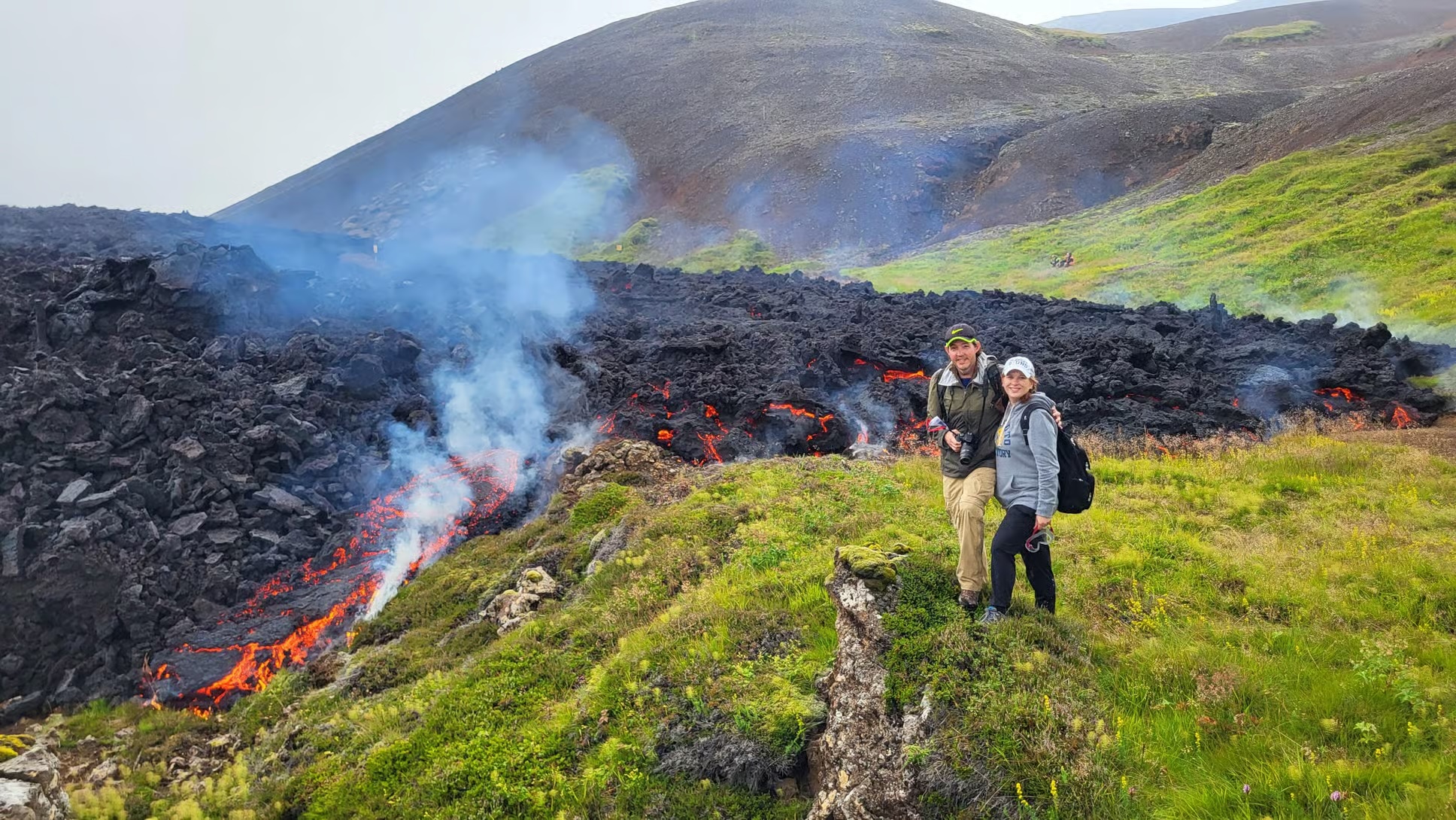
Iceland is a land shaped by fire and ice, where the ground frequently rumbles and new lava fields emerge. When a volcano erupts, the natural reaction for any traveler is concern: “Is it safe to visit Iceland during a volcanic eruption?” It’s a valid question, one thousands ask with every seismic tremor. News headlines paint a dramatic picture, but the reality on the ground is far more nuanced.
This guide offers a comprehensive, honest, and actionable framework for assessing the safety of Iceland volcano tours during an eruption, helping travelers make informed decisions. It details specific risks, explains how Iceland’s geological experts manage these events, and outlines practical steps to ensure your safety and enjoyment on the ground.
The Short Answer: Is It Truly Safe to Visit Iceland During a Volcanic Eruption?
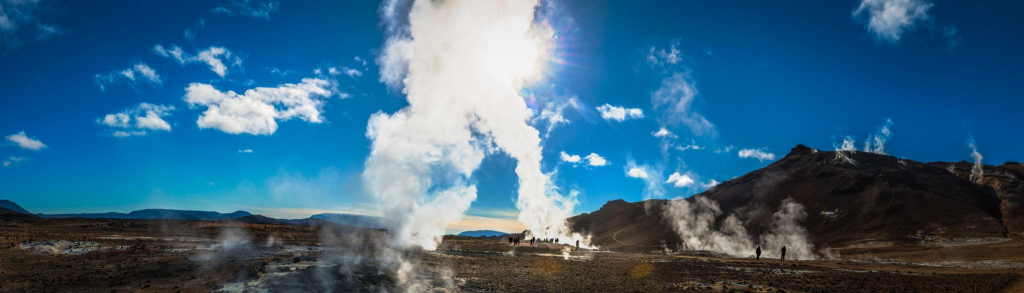
For the vast majority of visitors, yes, it is safe to visit Iceland during a volcanic eruption, provided you adhere strictly to official warnings and guidance. Iceland’s volcanic activity is closely monitored by world-leading geologists and civil protection agencies, who swiftly implement safety measures. Most eruptions are localized and effusive – lava flows rather than explosive ash – and do not threaten populated areas or major travel routes.
However, “safe” does not mean “unaffected.” Travelers can expect localized closures of specific sites, road diversions, and shifts in air quality around the immediate eruption zone. The biggest friction point for travelers is often not safety itself, but the disruption to pre-planned itineraries and the need for constant adaptability.
Understanding Iceland’s Volcanic System: Active, Dormant, and Emerging Threats
Iceland sits on the Mid-Atlantic Ridge, a hotspot of tectonic activity. This geological reality means eruptions are a regular, not exceptional, occurrence. Understanding the different types of volcanic systems and their characteristics is crucial for assessing risk.
Iceland hosts over 30 active volcanic systems, many of which are subglacial. Iceland’s eruptions manifest in two primary forms:
- Effusive Eruptions: These characterize the Reykjanes Peninsula’s recent activity (e.g., Fagradalsfjall, Sundhnúkur-Grindavík area). Lava flows relatively slowly from fissures, creating dramatic but predictable spectacles. Risks are primarily from toxic gases, unstable ground, and direct lava contact.
- Explosive Eruptions: Often associated with subglacial volcanoes like Eyjafjallajökull (2010) or Katla. Magma interacts with ice, generating massive ash plumes that disrupt air travel across continents. While rare, these pose risks from ashfall and potential glacial outburst floods (jökulhlaups).
Below is an overview of some of Iceland’s significant volcanic systems, categorized by their typical activity and potential impact. Keep in mind that geological activity is dynamic, and statuses can change.
| Volcano System | Location | Typical Activity | Current Status & Monitoring | Primary Risks | Key Impact Zones |
|---|---|---|---|---|---|
| Reykjanes Peninsula (e.g., Fagradalsfjall, Sundhnúkur) | Southwest Iceland, near Keflavík & Reykjavík | Effusive fissure eruptions; basaltic lava flows | Highly active; constant seismic and deformation monitoring | Toxic gas (SO2, CO2), lava flows, unstable ground, fire | Grindavík, Blue Lagoon, local roads on Reykjanes. KEF airport generally unaffected. |
| Katla | South Iceland, under Mýrdalsjökull glacier | Subglacial, highly explosive (ash, jökulhlaups) | Dormant but closely monitored; overdue for a major eruption | Massive ash plumes, glacial outburst floods, significant air travel disruption | South Coast, major roads (Ring Road), international air travel |
| Hekla | South Iceland | Frequent, often explosive (ash), unpredictable without long warning | Dormant but considered highly active; last erupted 2000 | Ashfall, pyroclastic flows, localized impacts on agriculture and domestic air travel | Central highlands, farms in vicinity, domestic flight paths |
| Grímsvötn | Southeast Iceland, under Vatnajökull glacier | Subglacial, often effusive but can be explosive; frequent jökulhlaups | Active; has a high eruption frequency, erupting roughly every 7-19 years (last major in 2011) | Ash plumes, glacial outburst floods, steam explosions | Vatnajökull region, Ring Road sections (e.g., Skeiðarársandur), potentially international air traffic |
| Askja | Central Highlands | Explosive (ash) and effusive (lava); caldera collapse potential | Dormant but showing recent seismic activity and ground uplift | Ashfall, geothermal activity, remote access challenges | Central Highlands (Öskjuleið F-road), localized impacts |
| **Bárðarbunga** | Central Highlands, under Vatnajökull glacier | Effusive fissure eruptions (Holuhraun 2014-15) and subglacial explosive | Dormant since Holuhraun, but remains a major system | Large lava flows, widespread gas pollution, localized ashfall | Central Highlands, air quality impacts far downwind |
Even “dormant” volcanoes in Iceland are under constant surveillance. The biggest friction point with this dynamic landscape is that eruption types and locations, though understood, remain unpredictable, requiring travelers to stay vigilant.
The Real Risks: What Dangers Do Icelandic Eruptions Pose to Travelers?
Eruptions in Iceland are rarely catastrophic for inhabitants, but they present specific hazards travelers must understand beyond a mere inconvenience.
Toxic Gas Emissions
Toxic gas emissions represent a pervasive and often underestimated danger, particularly with effusive basaltic eruptions like those on Reykjanes.
- Sulfur Dioxide (SO2): A pungent gas that irritates eyes, throat, and lungs. High concentrations are lethal, particularly for those with respiratory conditions. It is heavier than air and accumulates in low-lying areas.
- Carbon Dioxide (CO2): An odorless, colorless gas that displaces oxygen. It causes dizziness, unconsciousness, and death if trapped in depressions or hollows.
- Hydrogen Sulfide (H2S): Rotten-egg smell at low concentrations, but nerve-paralyzing at high levels, rendering the smell undetectable.
- Hydrogen Fluoride (HF): Less common in effusive eruptions, but highly toxic ash-borne gas during explosive events, damaging respiratory systems and causing acid rain.
Health impacts are severe for vulnerable individuals (children, elderly, those with asthma or heart conditions). Long-term health implications of even low-level exposure are still being studied; avoiding direct exposure is best. The biggest friction point is that these gases are invisible, and their movement depends entirely on wind direction, which changes rapidly.
Ashfall
Ashfall is associated with explosive, subglacial eruptions.
- Respiratory Hazards: Fine ash particles cause irritation, coughing, and exacerbate respiratory diseases. Face masks (N95 or higher) are effective.
- Visibility & Travel: Heavy ashfall drastically reduces visibility, making driving dangerous. It contaminates water sources.
- Mechanical Damage: Volcanic ash is abrasive and conductive. It clogs engines, damages electronics, and disrupts infrastructure. This was the primary reason for international flight disruptions during the 2010 Eyjafjallajökull eruption.
Lava Flows
Direct contact with lava is lethal due to extreme heat. Lava flows move slowly, but they spread unpredictably, changing landscapes and blocking roads.
- Direct Hazard: Never approach active lava flows closely without official guidance and proper safety measures.
- Infrastructure: Lava cuts off communities, destroys infrastructure, and starts fires.
- New Hazards: Newly formed lava fields are unstable, remain hot for years, and collapse without warning.
Jökulhlaups (Glacial Outburst Floods)
A catastrophic hazard from subglacial eruptions. When an eruption occurs under a glacier, meltwater accumulates rapidly beneath the ice, eventually bursting out in a massive, destructive flood.
- Destructive Power: These floods wash away bridges, roads, and land, carrying large blocks of ice.
- Warning Systems: Iceland has robust monitoring; roads close well in advance if a jökulhlaup is imminent.
The biggest friction point with these hazards is their dynamic nature. Safety conditions can change rapidly if wind shifts or activity escalates.
How Volcanic Activity Impacts Travel and Tourism in Iceland
The impact of a volcanic eruption on travel plans depends heavily on the type, location, and scale of the event.
International Flights to Keflavík (KEF)
Effusive eruptions, which characterize recent activity on the Reykjanes Peninsula, do not affect international flights to KEF, as they produce minimal ash and gas plumes remain low to the ground, away from flight paths. The exception was the 2010 Eyjafjallajökull eruption, an explosive subglacial event that produced a massive ash cloud that spread across Europe, grounding thousands of flights. Such an event is rare for Iceland. The biggest friction point here is the public perception versus reality: many travelers assume any eruption means flight cancellations, which is incorrect.
Domestic Road Networks
Road impacts are localized:
- Ring Road (Route 1): The main arterial road circumnavigating Iceland is not directly threatened by effusive eruptions. In the event of a jökulhlaup or a large eruption in the highlands, sections close, particularly in the south or southeast.
- Local Roads: Roads leading directly to eruption sites or adjacent communities (like Grindavík on Reykjanes) close to public access. Diversions are in place, but access to popular spots is temporarily impossible.
Access to Popular Tourist Sites
- Blue Lagoon: This popular geothermal spa, located on the Reykjanes Peninsula, has experienced temporary closures due to its proximity to recent eruption sites and associated gas pollution. These closures are for visitor safety and reopen once conditions are stable.
- Reykjavík: The capital city is far enough from eruption sites to remain unaffected by direct hazards. Life continues as normal, though a faint smell of sulfur occasionally drifts in on certain winds.
- Other Regions: Areas like the Golden Circle, South Coast (east of the Reykjanes Peninsula), Snæfellsnes Peninsula, North, East, and Westfjords remain fully accessible and safe, operating as usual.
The honest negative is that even small, localized eruptions disrupt iconic experiences. If the Blue Lagoon is closed during your visit, it is a significant disappointment for many.
Staying Safe in Iceland: Essential Guidelines and Official Resources
Prioritizing safety during volcanic activity requires staying informed and following expert advice.
Official Safety Guidelines & Real-time Updates
Iceland has a robust system for monitoring volcanic activity and disseminating information:
- Icelandic Met Office (Veðurstofa Íslands): This is the primary source for seismic activity, weather forecasts, and volcano updates. Check their website (www.vedur.is) daily for the latest geological news and maps.
- Department of Civil Protection and Emergency Management (Almannavarnir): This agency issues public safety warnings, evacuation orders, and advises on restricted areas. Their updates are critical for understanding immediate risks. Their website (www.almannavarnir.is) and social media channels are essential.
- SafeTravel.is: Operated by the Icelandic Association for Search and Rescue, this site offers travel alerts, road conditions, and official safety advice for all conditions, including volcanic activity. You can register your travel plans with them.
The biggest friction point is that these sites are packed with scientific data, and interpreting it requires effort. A simple “green light, go” status is not available for every area.
Personal Safety Precautions & Gear
When visiting Iceland during an eruption, or if one begins during your trip, take these actions and prepare this gear:
- Monitor Wind Direction: Volcanic gases are invisible. Check the wind direction (e.g., via weather apps or the Met Office) relative to any eruption site. Stay upwind of the eruption at all times. If the wind changes, leave immediately.
- Respect Closures & Barriers: These are in place for your safety. Going around them is dangerous. New lava fields are unstable, can contain hidden fissures, and release gases unpredictably.
- Appropriate Footwear: For any volcano viewing hike, robust hiking boots with ankle support are non-negotiable. The terrain is uneven, rocky, and slippery.
- Layered Clothing: Iceland’s weather changes quickly, especially near eruption sites where wind is extreme. Thermal layers, waterproof and windproof outer shells, hat, and gloves are essential, even in summer.
- Gas Masks (N95/FFP2 or higher): If venturing near an eruption site, bring an N95 or FFP2 respirator mask for ash and particulate matter. For strong gas concentrations, a specialized full-face gas mask with multi-gas filters (like ABEK filters) is advised, particularly for guides. Check official advisories on mask types and necessity.
- Headlamp: Even in daylight, conditions darken quickly, and visibility is impaired by gas or ash.
- Personal Gas Meter: Guides carry personal gas meters. Experienced outdoor enthusiasts planning independent travel near eruption zones may find a portable multi-gas detector for SO2 and CO2 helpful for real-time air quality data. This is an advanced step, not for casual tourists.
Responsible Volcanic Tourism: Safely Witnessing Iceland’s Raw Power
When an eruption is safely accessible and authorities permit visits, witnessing Iceland’s geological power is a profound experience. Responsibility is key.
Authorized Viewing Areas & Guided Tours
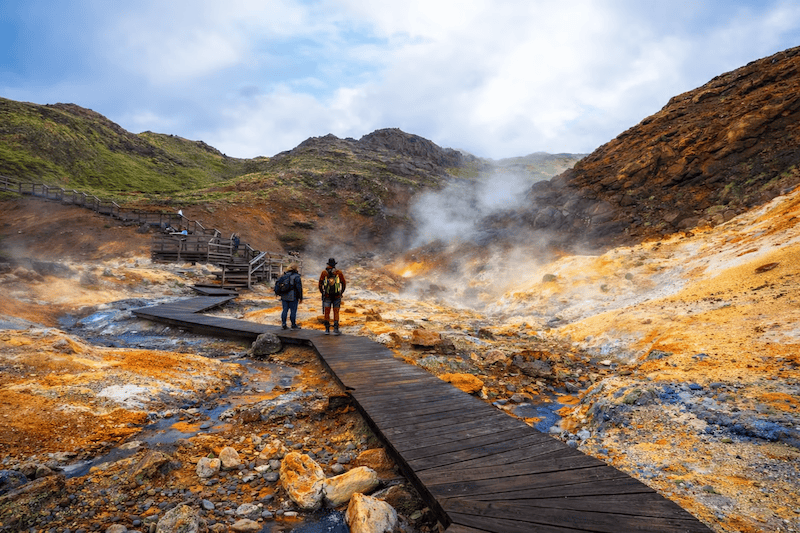
- Official Trails: Always stick to marked trails and designated viewing platforms. These are established based on expert assessment of wind patterns, lava flow paths, and gas dispersion.
- Guided Tours: For safety and insight, take a guided tour. Local guides are equipped with safety gear, gas meters, and real-time communication with authorities. They know the terrain and make informed decisions about safe access.
Below are examples of tours that allow you to explore Iceland’s volcanic landscapes, whether actively erupting or dormant (check tour descriptions for current eruption access):
- Fagradalsfjall Volcano Hike Guided Tour (if active and accessible):
- Practical: Price from €85 · Duration: 4-6 hours · Group size: up to 15 · Advance booking: yes
- What’s included: Guided hike, safety briefing, potentially some gear (check specifics).
- Best for: Travelers seeking close observation of an active eruption with expert guidance.
- One honest negative: The hike itself is strenuous, and the eruption is not visible or as active on any given day.
- Find tours like this on Viator
- Iceland’s Golden Circle & Geothermal Wonders Tour:
- Practical: Price from €70 · Duration: 8-10 hours · Group size: variable (often large bus) · Advance booking: yes
- What’s included: Transport, guide, visits to Þingvellir, Geysir, Gullfoss, Kerið crater.
- Best for: General exploration of Iceland’s geothermal power, even when no eruption is active.
- One honest negative: These tours are often large and feel rushed at each stop, with limited time for independent exploration.
- Explore Golden Circle tours on GetYourGuide
- Raufarhólshellir Lava Tunnel Exploration:
- Practical: Price from €55 · Duration: 1-2 hours · Group size: up to 30 · Advance booking: yes
- What’s included: Guide, helmet, sometimes headlamp.
- Best for: Exploring ancient lava flows in a structured, safe environment, regardless of current volcanic activity.
- One honest negative: It is cold and dark inside, and claustrophobia is an issue for some.
- Discover lava tunnel tours
Ethical Behavior
- Leave No Trace: Stick to paths, do not litter, and respect the fragile environment.
- Wildlife: Do not disturb any wildlife in the area.
- Cultural Sensitivity: While witnessing eruptions, remember that for many Icelanders, these events are concerning, especially if they impact homes or livelihoods.
What to Do if an Eruption Unfolds During Your Iceland Trip
Preparing for an unexpected eruption during your visit reduces stress and ensures safety.
Immediate Actions
- Stay Calm: Panic hinders clear thinking.
- Check Official Information: Immediately consult the Icelandic Met Office (www.vedur.is) and Civil Protection (www.almannavarnir.is / SafeTravel.is) websites for real-time updates and official advisories.
- Follow Instructions: If authorities issue an evacuation order for your area or close roads, comply immediately without question.
- Contact Your Accommodation/Tour Operator: They are your most immediate source of local, practical advice and guide you on the best course of action.
Communication & Resources
- Emergency Number (112): This is Iceland’s equivalent of 911 for police, fire, and medical emergencies. Use it if you are in immediate danger or witness someone in distress.
- Travel Provider: Contact your airline, rental car company, and accommodation provider to understand how the eruption affects your bookings and what options are available.
- Embassy/Consulate: If you are a foreign national, inform your country’s embassy or consulate in Reykjavík of your situation, especially if you face significant disruption or need assistance.
- Local Information Centers: Tourist information centers are valuable hubs for localized updates and assistance.
The honest negative is that despite clear guidelines, disruptions are stressful, and travelers face long waits for transport or rebooking.
Travel Insurance and Icelandic Volcanoes: Navigating Your Coverage
Understanding your travel insurance policy in the context of volcanic activity avoids financial disappointment.
What’s Covered (or Not)
- Standard Policies: Most basic travel insurance policies do not cover cancellations or disruptions due to “acts of nature” if the volcano erupted (or was a known risk) when you booked your trip. They exclude “force majeure” events or “known events” if a travel advisory was issued.
- Flight Cancellations due to Ash: If your flight is cancelled due to an ash cloud and you bought your policy before the eruption became a “known event” affecting flights, your policy covers non-refundable expenses or provides rebooking assistance. Airlines often offer rebooking regardless.
- Itinerary Changes due to Lava Flows/Gas: If an attraction (e.g., Blue Lagoon) or road closes due to lava or gas, standard policies do not cover disappointment or alternative activity costs unless a widespread “do not travel” advisory is issued.
- Medical Emergencies: If you suffer a health issue directly related to volcanic gases or ash (e.g., respiratory distress), your medical coverage applies, provided you adhered to safety guidelines and were not in a restricted area.
- “Cancel For Any Reason” (CFAR) Policies: These are more expensive and offer flexibility. They enable you to cancel your trip for almost any reason (including fear of an eruption) and typically refund 50-75% of your non-refundable costs. You must purchase CFAR within a short window after your initial trip deposit.
Tips for Choosing Appropriate Coverage
- Read the Fine Print: Do not assume. Carefully review the “force majeure,” “natural disaster,” “known event,” and “hazardous activity” clauses.
- Ask Direct Questions: Contact the insurance provider and specifically ask about coverage for volcanic ash clouds, lava flows affecting roads, and gas emissions impacting health. Get answers in writing.
- Buy Early: Purchase your insurance as soon as you book any non-refundable parts of your trip, particularly if volcanic activity is ongoing in Iceland. If you buy after an eruption has started or a warning is issued, it is excluded.
The honest negative is that robust coverage for volcanic activity, especially for known events, comes at a premium or requires a specific, more flexible policy type. Many travelers regret not thoroughly checking this beforehand.
Planning Your Trip: Flexibility and Preparedness Are Key
Visiting Iceland during volcanic activity is an incredible experience, but it requires a different mindset than a standard vacation.
- Embrace Flexibility: Build flexibility into your itinerary. Book refundable accommodations and rental cars. Have alternative activities in mind for popular spots that close.
- Monitor Conditions Before Departure: Check the official Icelandic websites (Met Office, Civil Protection, SafeTravel.is) in the weeks and days leading up to your trip. Be prepared to adjust your plans.
- Pack Smart: Beyond standard Iceland packing, include an N95 mask and good quality hiking boots, regardless of the season.
- No “Best Time”: There is no “best time” to visit Iceland to avoid a volcanic eruption; activity is geologically unpredictable. Instead, focus on how to “best plan and prepare” regardless of the season. This involves continuously monitoring official real-time updates, understanding seasonal impacts on travel and eruption viewing conditions (e.g., daylight hours, weather severity), and building flexibility into your itinerary.
- Consider a Tour Guide: If an eruption is accessible, a guided tour offers safety, local knowledge, and an enhanced experience.
The honest negative is that even with all the planning, an eruption can completely alter travel experiences, leading to unforeseen expenses or missed opportunities.
Conclusion: Experiencing Iceland’s Dynamic Nature Responsibly
Visiting Iceland during a volcanic eruption is safe, given the country’s extensive expertise in geological monitoring and public safety. However, “safe” requires informed decision-making, strict adherence to official guidance, and a willingness to adapt plans. Understanding specific hazards, staying updated with real-time information, and packing appropriate gear allows responsible viewing of Iceland’s dynamic landscape. Prioritize official sources, remain flexible, and experience a distinct aspect of this island.
FAQ
Is it generally safe to visit Iceland when there is a volcanic eruption happening in the country?
Yes, for most areas, it is generally safe, but this comes with significant caveats. Icelandic eruptions are closely monitored, and authorities are adept at managing risks. Most active eruptions are localized, and the vast majority of popular tourist areas, including Reykjavík and the Golden Circle, remain unaffected. However, direct access to eruption sites may be restricted, and localized areas (like parts of the Reykjanes Peninsula) can experience temporary closures or air quality issues due to gas.
What are the primary risks travelers face from volcanic activity in Iceland (e.g., ash, gas, lava)?
The primary risks are highly dependent on the eruption type. For effusive (lava-producing) eruptions like those recently seen on Reykjanes, the main dangers are invisible toxic gases (like SO2 and CO2) that can accumulate in low-lying areas and pose serious health threats, and unstable new lava fields that are hot and prone to collapse. For less frequent, explosive eruptions (often subglacial), ash clouds are the main risk, potentially disrupting air travel and causing respiratory issues, along with glacial outburst floods (jökulhlaups).
Which areas of Iceland are typically most affected by volcanic eruptions, and which remain safe for visitors?
Eruptions most frequently occur in specific volcanic zones. Recently, the Reykjanes Peninsula has seen significant activity, leading to localized impacts on towns like Grindavík and attractions like the Blue Lagoon. Areas directly downwind of an eruption can experience temporary gas pollution. However, the capital Reykjavík, the entire Golden Circle, and regions like the South Coast (east of Reykjanes), Snæfellsnes Peninsula, North, East, and Westfjords typically remain unaffected and safe for visitors.
How do volcanic eruptions in Iceland typically impact international flights to Keflavík (KEF) and domestic travel?
Effusive eruptions, which characterize recent activity on the Reykjanes Peninsula, generally do not impact international flights to Keflavík (KEF), as they produce minimal ash plumes. The notorious 2010 Eyjafjallajökull eruption, which grounded flights across Europe, was an explosive subglacial event and an outlier. Domestic travel might see localized road closures near eruption sites, requiring diversions, but the main Ring Road (Route 1) typically remains open and safe.
Will my standard travel insurance policy cover cancellations or medical emergencies due to a volcanic eruption in Iceland?
Most standard travel insurance policies do not typically cover cancellations or itinerary changes due to volcanic activity, especially if the eruption was already ongoing or considered a ‘known event’ when you purchased your policy. They often contain exclusions for ‘acts of nature’ or ‘force majeure.’ However, if you bought your policy before an eruption started, some might cover flight cancellations due to ash. For comprehensive coverage against such events, you generally need to purchase a more expensive ‘Cancel For Any Reason’ (CFAR) policy, often within a short window after your initial booking.
What essential items should I pack if I’m visiting Iceland during a period of volcanic activity?
Beyond your usual Iceland packing list, consider these additions: robust hiking boots (even for non-eruption hikes, the terrain is challenging), plenty of warm, waterproof, and windproof layers, a headlamp (for low visibility), and potentially an N95 or FFP2 respirator mask for ash and particulate matter if venturing near affected areas. For very close viewing (typically with a guide), a specialized full-face gas mask and a personal gas meter might be relevant.
Where can I find the most reliable and up-to-date information on active volcanic eruptions and safety advisories in Iceland?
The most reliable sources are official Icelandic government agencies:
- Icelandic Met Office (Veðurstofa Íslands): For geological updates and weather forecasts (www.vedur.is).
- Department of Civil Protection and Emergency Management (Almannavarnir): For public safety warnings and restricted areas (www.almannavarnir.is).
- SafeTravel.is: For general travel alerts and road conditions (www.safetravel.is).
These sites are updated continuously and are the authoritative voice on safety.
Is it possible and safe to view an active volcanic eruption in Iceland, and how can I do so responsibly?
Yes, it is often possible and safe to view active effusive eruptions, provided authorities have deemed the area safe and opened designated viewing paths. To do so responsibly, you must always stick to marked trails, respect all closures and barriers, and check wind direction to avoid gas plumes. The safest and most informative way is often to join a guided tour; guides are equipped with gas meters and maintain communication with civil protection agencies to ensure you are in the safest possible location.
What is the typical cost implication of visiting Iceland during an eruption, considering potential disruptions or specialized gear?
The cost implications vary. You might incur extra costs for specialized gear like quality N95 masks or robust hiking boots. The main financial impact often comes from itinerary changes: if an attraction closes, you might lose money on pre-booked tickets (unless covered by specific insurance or rebooked by the operator). If flights are delayed or cancelled, you could face additional accommodation and rebooking fees, especially if your travel insurance doesn’t cover ‘acts of nature.’ Booking flexible, refundable options can mitigate some of these potential costs.
Is there a “best time” to visit Iceland to minimize the chance of encountering a volcanic eruption, or is activity unpredictable?
Volcanic activity in Iceland is inherently geologically unpredictable, meaning there is no “best time” to visit that minimizes the chance of encountering an eruption. Eruptions can occur at any time of year. Instead of trying to avoid them, the focus should be on being prepared and flexible. This means continuously monitoring official updates from Icelandic authorities before and during your trip, understanding how seasonal weather might impact travel and viewing conditions (e.g., fewer daylight hours in winter), and building adaptability into your itinerary regardless of when you travel.
{
  "@context": "https://schema.org",
  "@type": "FAQPage",
  "mainEntity": [
    {
      "@type": "Question",
      "name": "Is it generally safe to visit Iceland when there is a volcanic eruption happening in the country?",
      "acceptedAnswer": {
        "@type": "Answer",
        "text": "Yes, for most areas, it is generally safe, but this comes with significant caveats. Icelandic eruptions are closely monitored, and authorities are adept at managing risks. Most active eruptions are localized, and the vast majority of popular tourist areas, including Reykjavík and the Golden Circle, remain unaffected. However, direct access to eruption sites may be restricted, and localized areas (like parts of the Reykjanes Peninsula) can experience temporary closures or air quality issues due to gas."
      }
    },
    {
      "@type": "Question",
      "name": "What are the primary risks travelers face from volcanic activity in Iceland (e.g., ash, gas, lava)?",
      "acceptedAnswer": {
        "@type": "Answer",
        "text": "The primary risks are highly dependent on the eruption type. For effusive (lava-producing) eruptions like those recently seen on Reykjanes, the main dangers are invisible toxic gases (like SO2 and CO2) that can accumulate in low-lying areas and pose serious health threats, and unstable new lava fields that are hot and prone to collapse. For less frequent, explosive eruptions (often subglacial), ash clouds are the main risk, potentially disrupting air travel and causing respiratory issues, along with glacial outburst floods (jökulhlaups)."
      }
    },
    {
      "@type": "Question",
      "name": "Which areas of Iceland are typically most affected by volcanic eruptions, and which remain safe for visitors?",
      "acceptedAnswer": {
        "@type": "Answer",
        "text": "Eruptions most frequently occur in specific volcanic zones. Recently, the Reykjanes Peninsula has seen significant activity, leading to localized impacts on towns like Grindavík and attractions like the Blue Lagoon. Areas directly downwind of an eruption can experience temporary gas pollution. However, the capital Reykjavík, the entire Golden Circle, and regions like the South Coast (east of Reykjanes), Snæfellsnes Peninsula, North, East, and Westfjords typically remain unaffected and safe for visitors."
      }
    },
    {
      "@type": "Question",
      "name": "How do volcanic eruptions in Iceland typically impact international flights to Keflavík (KEF) and domestic travel?",
      "acceptedAnswer": {
        "@type": "Answer",
        "text": "Effusive eruptions, which characterize recent activity on the Reykjanes Peninsula, generally do not impact international flights to Keflavík (KEF), as they produce minimal ash plumes. The notorious 2010 Eyjafjallajökull eruption, which grounded flights across Europe, was an explosive subglacial event and an outlier. Domestic travel might see localized road closures near eruption sites, requiring diversions, but the main Ring Road (Route 1) typically remains open and safe."
      }
    },
    {
      "@type": "Question",
      "name": "Will my standard travel insurance policy cover cancellations or medical emergencies due to a volcanic eruption in Iceland?",
      "acceptedAnswer": {
        "@type": "Answer",
        "text": "Most standard travel insurance policies do not typically cover cancellations or itinerary changes due to volcanic activity, especially if the eruption was already ongoing or considered a 'known event' when you purchased your policy. They often contain exclusions for 'acts of nature' or 'force majeure.' However, if you bought your policy before an eruption started, some might cover flight cancellations due to ash. For comprehensive coverage against such events, you generally need to purchase a more expensive 'Cancel For Any Reason' (CFAR) policy, often within a short window after your initial booking."
      }
    },
    {
      "@type": "Question",
      "name": "What essential items should I pack if I'm visiting Iceland during a period of volcanic activity?",
      "acceptedAnswer": {
        "@type": "Answer",
        "text": "Beyond your usual Iceland packing list, consider these additions: robust hiking boots (even for non-eruption hikes, the terrain is challenging), plenty of warm, waterproof, and windproof layers, a headlamp (for low visibility), and potentially an N95 or FFP2 respirator mask for ash and particulate matter if venturing near affected areas. For very close viewing (typically with a guide), a specialized full-face gas mask and a personal gas meter might be relevant."
      }
    },
    {
      "@type": "Question",
      "name": "Where can I find the most reliable and up-to-date information on active volcanic eruptions and safety advisories in Iceland?",
      "acceptedAnswer": {
        "@type": "Answer",
        "text": "The most reliable sources are official Icelandic government agencies: Icelandic Met Office (Veðurstofa Íslands) for geological updates and weather forecasts (www.vedur.is); Department of Civil Protection and Emergency Management (Almannavarnir) for public safety warnings and restricted areas (www.almannavarnir.is); and SafeTravel.is for general travel alerts and road conditions (www.safetravel.is). These sites are updated continuously and are the authoritative voice on safety."
      }
    },
    {
      "@type": "Question",
      "name": "Is it possible and safe to view an active volcanic eruption in Iceland, and how can I do so responsibly?",
      "acceptedAnswer": {
        "@type": "Answer",
        "text": "Yes, it is often possible and safe to view active effusive eruptions, provided authorities have deemed the area safe and opened designated viewing paths. To do so responsibly, you must always stick to marked trails, respect all closures and barriers, and check wind direction to avoid gas plumes. The safest and most informative way is often to join a guided tour; guides are equipped with gas meters and maintain communication with civil protection agencies to ensure you are in the safest possible location."
      }
    },
    {
      "@type": "Question",
      "name": "What is the typical cost implication of visiting Iceland during an eruption, considering potential disruptions or specialized gear?",
      "acceptedAnswer": {
        "@type": "Answer",
        "text": "The cost implications vary. You might incur extra costs for specialized gear like quality N95 masks or robust hiking boots. The main financial impact often comes from itinerary changes: if an attraction closes, you might lose money on pre-booked tickets (unless covered by specific insurance or rebooked by the operator). If flights are delayed or cancelled, you could face additional accommodation and rebooking fees, especially if your travel insurance doesn't cover 'acts of nature.' Booking flexible, refundable options can mitigate some of these potential costs."
      }
    },
    {
      "@type": "Question",
      "name": "Is there a \"best time\" to visit Iceland to minimize the chance of encountering a volcanic eruption, or is activity unpredictable?",
      "acceptedAnswer": {
        "@type": "Answer",
        "text": "Volcanic activity in Iceland is inherently geologically unpredictable, meaning there is no 'best time' to visit that minimizes the chance of encountering an eruption. Eruptions can occur at any time of year. Instead of trying to avoid them, the focus should be on being prepared and flexible. This means continuously monitoring official updates from Icelandic authorities before and during your trip, understanding how seasonal weather might impact travel and viewing conditions (e.g., fewer daylight hours in winter), and building adaptability into your itinerary regardless of when you travel."
      }
    }
  ]
}
Leave a Reply